What makes a REAL ID ‘real’?
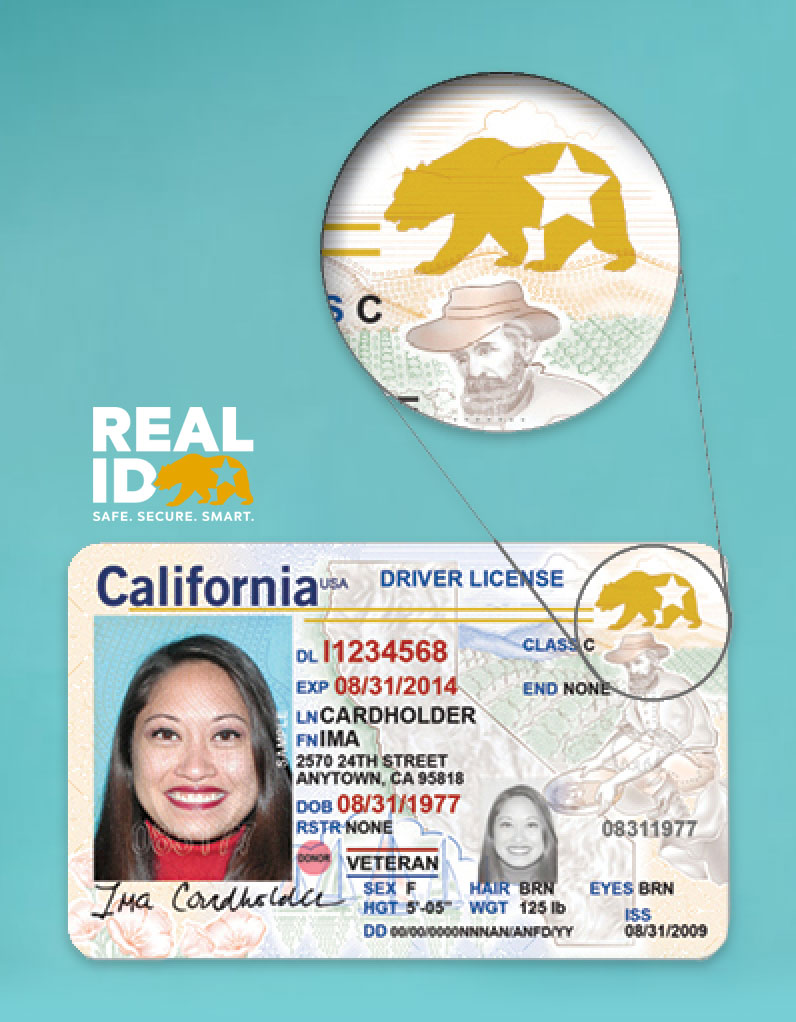
By now you’ve probably heard of “REAL ID”, the initiative to create an elevated class of identification to allow for interstate air travel. But, computationally, what makes REAL IDs special?
To answer that we’ll need to do some reading on AAMVA.
AAMVA is the organization responsible for creating driver’s license standards across the US and Canada, so that licenses can be easily interchanged.
The barcode on the back of your driver’s license contains your license’s AAMVA data. When you get pulled over, that barcode is scanned, and that way, regardless of where you are, any police officer can view your license’s data in a uniform way.
If you’re interested, I recommend you take a look at the AAMVA 2020 (version 10) standard: https://www.aamva.org/getmedia/99ac7057-0f4d-4461-b0a2-3a5532e1b35c/AAMVA-2020-DLID-Card-Design-Standard.pdf
There’s a set of required Data Elements that driver’s licenses data are supposed to have, basic things like your name, address, etc, but there are also optional fields that different states can add. And herein lies the answer to our question about what makes REAL IDs special.
If you take a non-REAL ID’s AAMVA data and compare it to a REAL ID’s AAMVA data, you can see exactly what changed:
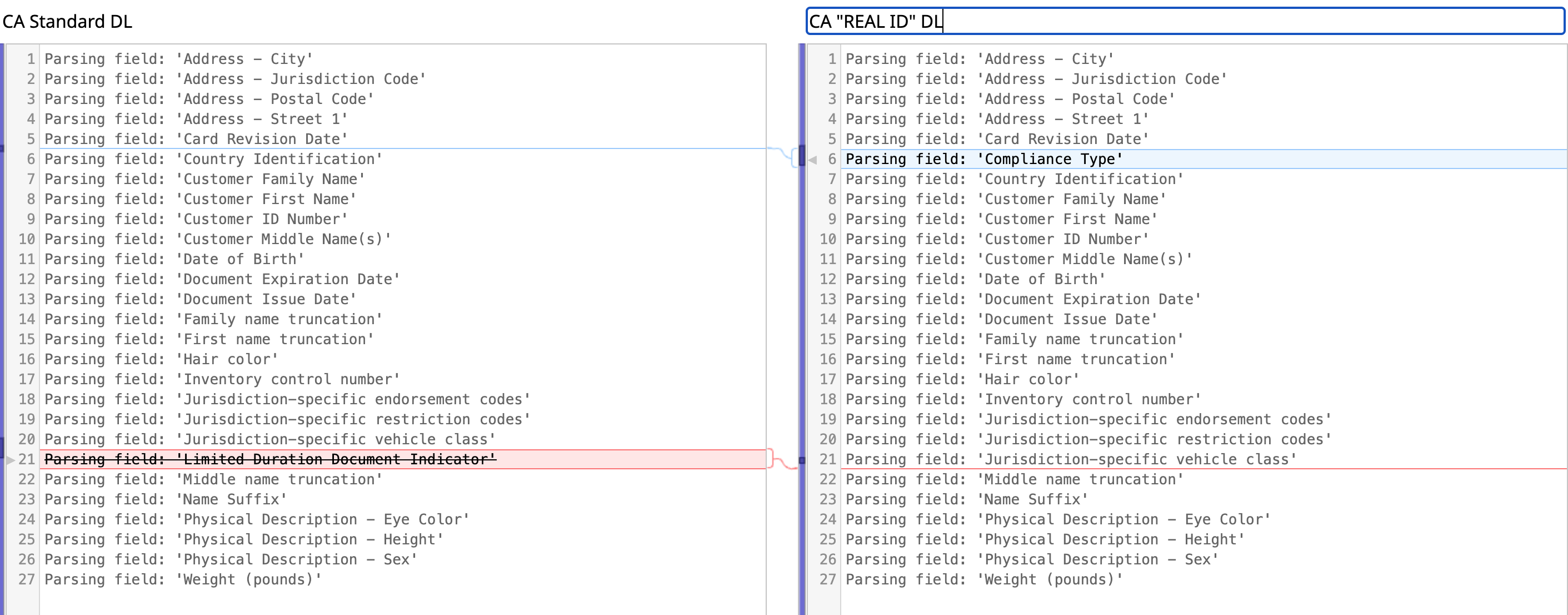
In the ‘old’ (read: non-REAL ID) license, there was a field called Limited Duration Document Indicator (see page 58 of standard).
Here’s what the standard had to say about that.
DHS required field that indicates that the cardholder has temporary lawful status = “1”.
This field is basically immigration saying: “yes, this person can be here temporarily”.
In ‘new’ IDs, this field was replaced with the Compliance Type field (see page 58), that vaguely is described as:
DHS required field that indicates compliance: “F” = compliant; and, “N” = non-compliant.
Leave a comment